

Our agenda.
Will they want to stay on the farm once they’ve seen the potential of agritourism? Plus marine innovation, median price peaks and an auction update. Let’s start Franksplaining Business.
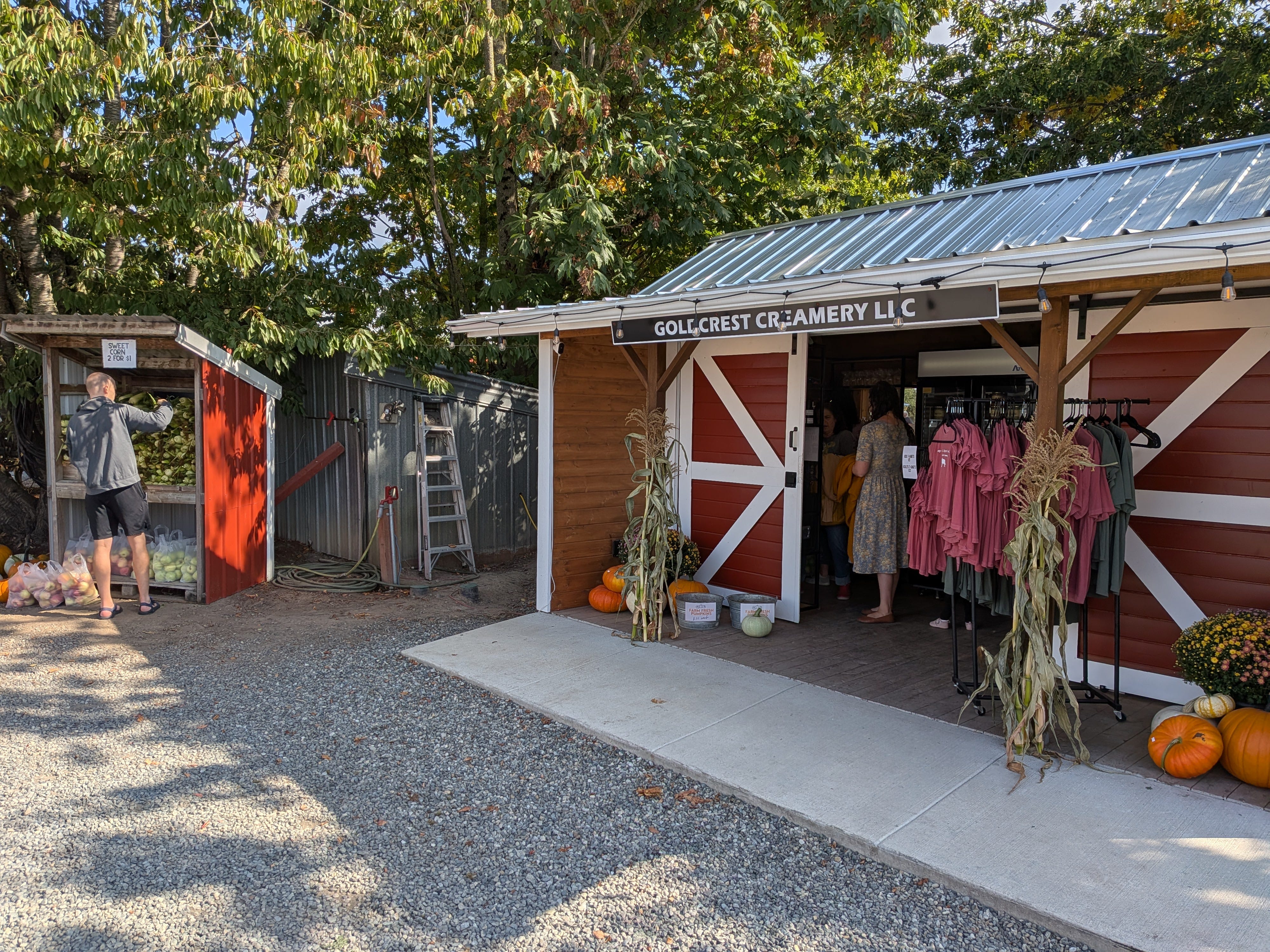
Agritourism grows as small farms seek income.
It’s harvest time. Pumpkin patches are set to open. U-pick rows have shifted from blueberries to apples. The ears of corn have been shipped to the store and their field transformed into a maze.
Yes, you can feel it all around, even on a 70-degree September day: agritourism is in the air.
And it’s on the increase at farms across Washington. Not just in the autumn at harvest or in the spring when tulips bloom, but — according to a recent state report — as a “rapidly expanding sector that enables small and mid-sized farms to diversify their income through activities such as farm tours, U-pick operations, festivals, farm-to-table meals, and on-farm events.”
The appeal of more farm financial support is clear. In the report requested by the legislature and delivered by the state’s Department of Commerce in May, farms in Washington face “significant challenges, with the ongoing loss of farmland and pressure on small producers.”
One key report finding was that most farmers were beginning to supplement their income with agritourism activities. But depending on the county, what agritourism entrepreneurship looks like, and its benefits and drawbacks, varies.
Benefits beyond cash
Whatcom and Skagit counties appear fertile ground for agritourism. The 2022 USDA National Census of Agriculture (the federal agency’s most recent) counted 1,582 farms in Whatcom County with an average size of 65 acres. In Skagit, the count was 882 farms with a 113-acre average. Both are in the state’s top 10 counties for the market value of agricultural products sold.
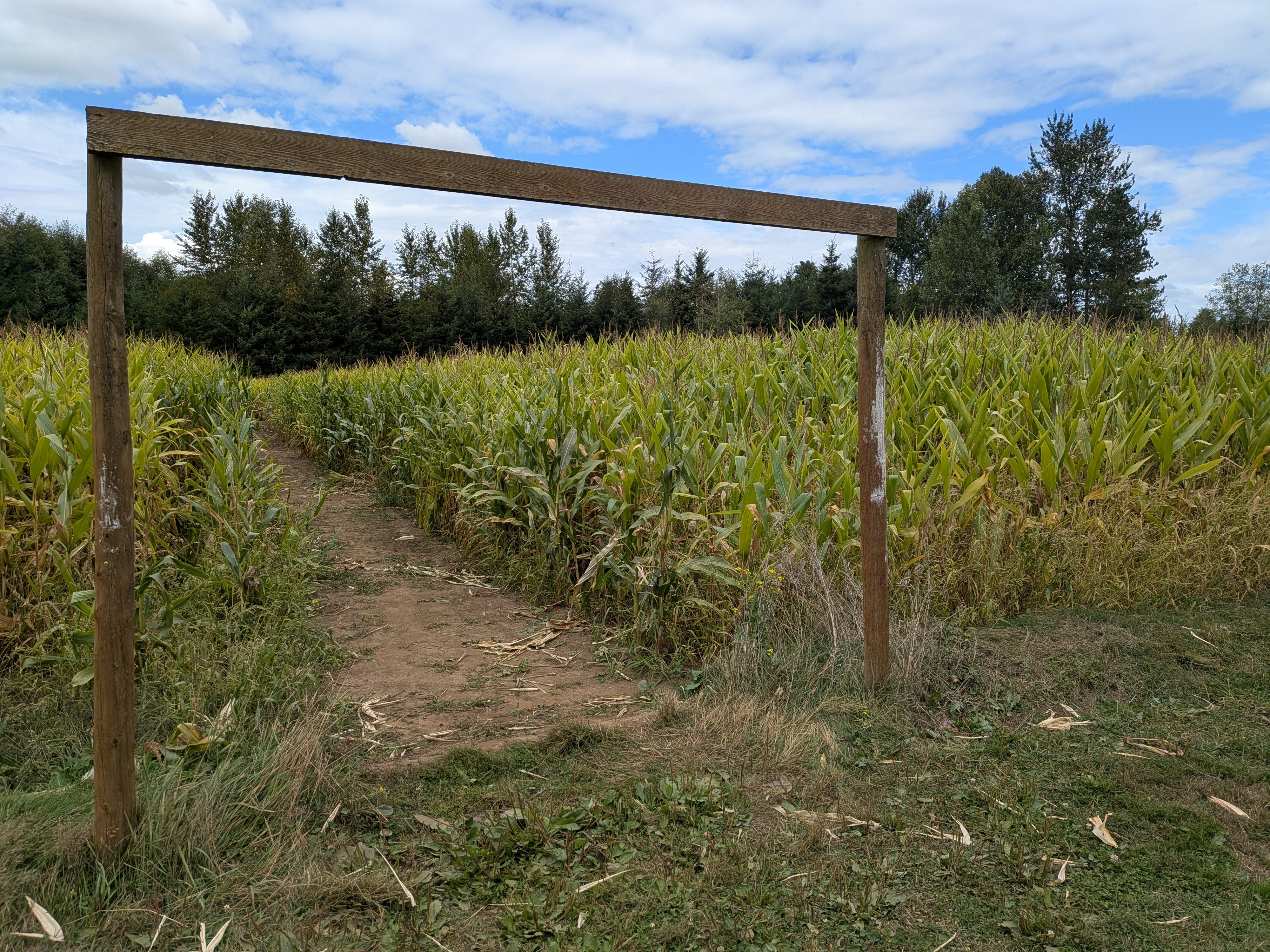
On a lightly cloudy Thursday before Labor Day weekend, I walked the orchards at Bellewood Farms in Lynden. On my way to the nearly two dozen varieties of apples still on the tree, I passed through the 15,000-square-foot Farmstore with its restaurant, shop and apple distillery, and then stepped beyond a not-quite-ready pumpkin patch on my right and a corn maze on my left. Between them, an empty apple bin train was awaiting its first seasonal ride to the U-pick rows.
It’s an annual tradition at the 62-acre fruit farm which harvests 1.7 million pounds of apples each year.
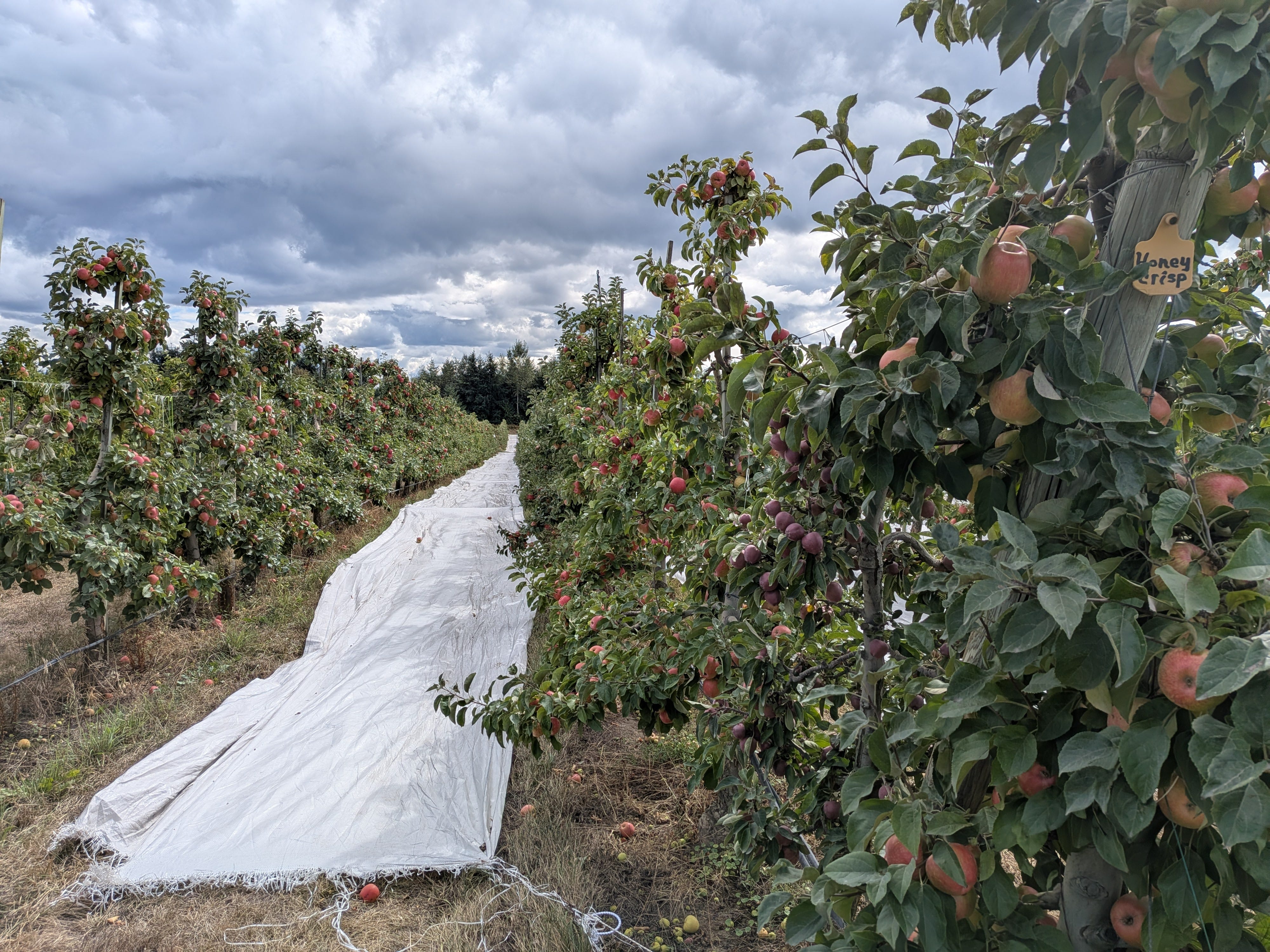
“We see our harvest activities less as agritourism and more as education,” said Eric Abel, president of Bellewood Farms & Distillery. “It’s surprising that kids don’t know where their food comes from and it’s fun that we can do the U-pick for families so they can see firsthand that apples don’t just pop out of the bins at the grocery store.”
Abel told me generally for farmers, making money at farming is tough and agritourism is one way to supplement the agriculture financially.
That specific benefit was repeated in the half-dozen interviews I conducted. But not every upside was necessarily obvious, or applied equally to all farms.
“In Bellewood’s case, since many stores in the western Pacific Northwest carry our apples and products, there is a branding benefit to agritourism,” Abel said. “Put plainly, someone who comes to have the fun farm experience and they go back to Seattle and sees our products in stores, it conjures up reminders of purity, natural environment, and fresh air. Because they came to visit, they feel a sense of ownership in the brand they’re about to buy in the store.”
Another benefit? Simple initial awareness.
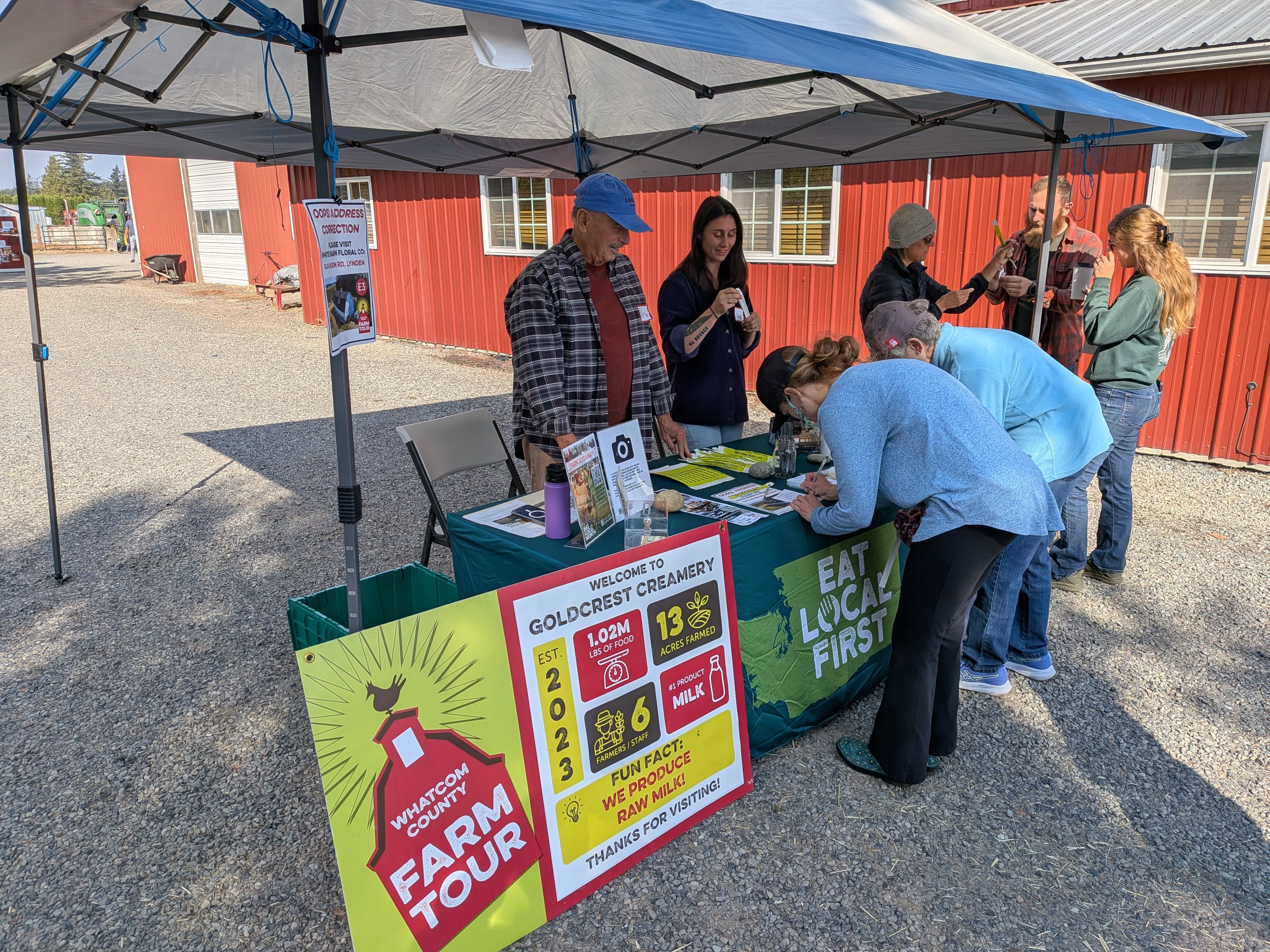
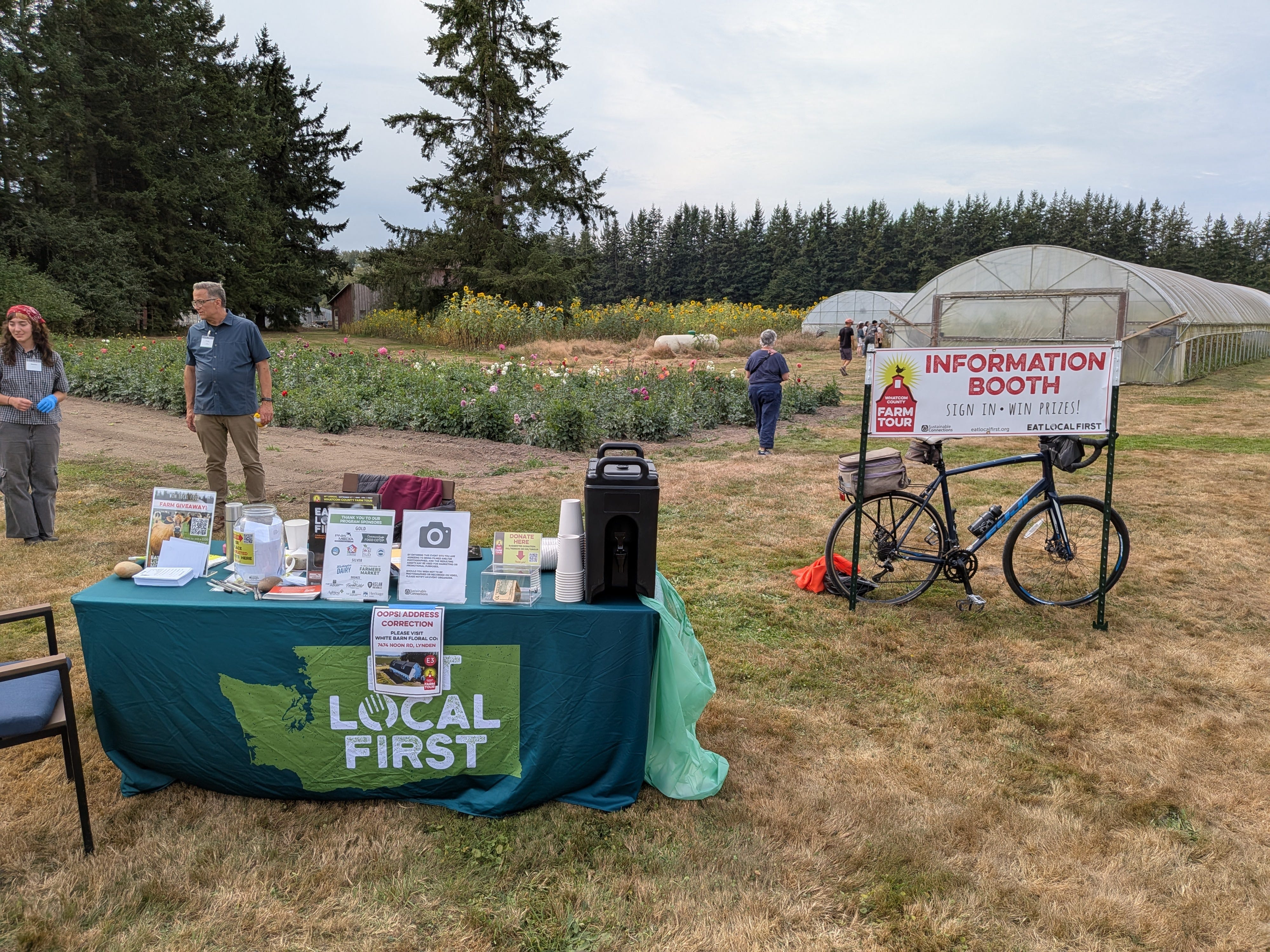
The Bellingham-based nonprofit Sustainable Connections has been conducting the annual Whatcom County Farm Tour since 2008. This year, the 13 farms taking part in the September choose-your-own-adventure routing included first-time participant Goldcrest Creamery.
Between gazing at adult cows and absurdly cute calves, I asked Goldcrest’s Mandy Lagerwey what the Bellingham dairy farm’s objective was for the Farm Tour.
“Opening up our farm and showing people what we all do,” she said. “We have our farm open every day of the year for people to get milk, and some people do go around and see it, but our big thing is with the raw milk we want people to see what we’re doing and how clean we are.”
If the Farm Tour led to “a lot of happy kids and parents that are willing to try raw milk,” Lagerwey said, it would be a success.
Jessica Gilllis, Sustainable Connections’ food and farming program manager, said that direct sales from agritourism often have lower overhead and leave more profit in the farmers’ pockets.
“These activities also build brand recognition and loyalty which broadens farmers’ customer bases,” Gillis said. “For example, many farmers that participate in the Whatcom County Farm Tour build relationships that lead to repeat customers at their farmstand, online, or even at their farmers market booths.”
Farmers: the next generation
One longer-term benefit might span decades.
Sustainable Connections Eat Local First Director Maressa Valliant said agritourism gives younger generations another reason to stay on the farm.
“Kids may have grown up on a family farm where commodity crops were grown for export, and seen their parents or grandparents toil and work in a very isolated profession that may or may not have penciled out,” Valliant said.
“But with the opportunity to perhaps spend some time away from the farm gaining new skills in business, marketing, and even hospitality,” she said, “they can reimagine new iterations of the family farm that feel exciting and speak to their desires to both be active members of their community, steward the land, grow food, and contribute to food security, but also see a more viable financial outlook.”
On yet a higher, very-big-picture level, agritourism could aid in reinforcing an entire area’s existing reputation for agriculture with a broader community.
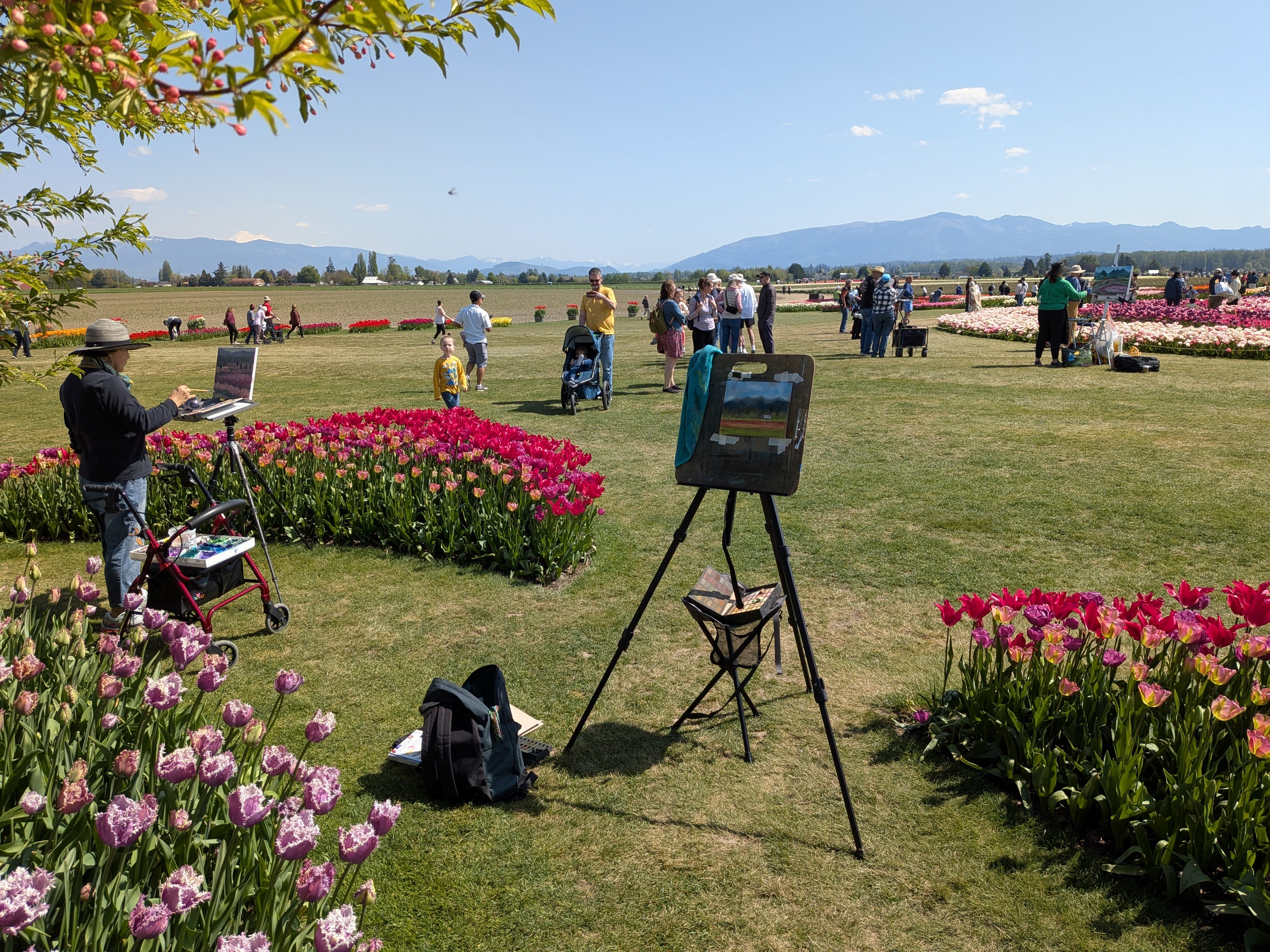
Skagit County is famously known for its “Welcome to Skagit Valley: Agricultural Scenic Corridor” signs along I-5. Skagit Tourism Bureau CEO Kristen Keltz said her organization started a new Food & Farm Taskforce in January that came out of its destination development plan process.
“The taskforce is focusing on how to get locally grown and sourced food in front of visitors and allow them to experience activities tied to local farms,” Keltz said. “We are looking at sourcing programs, mentorship, and starting a countywide restaurant week.”
The goal is to extend the agricultural experiences year-round, beyond any single high-profile season. For example, that restaurant week will take place in November 2027, she said.
Growing pains
Not every path to acceptable, successful agritourism activities is paved. Or even level.
Skagit County became an unfortunate poster child for the difficulties when it worked to codify what types of agritourism were allowed where. The effort began in January 2021 with the county’s planning commission. It didn’t end until April 2026 after a number of hearings, revisions and a two-year moratorium led the Skagit County Commission to approve a revised ordinance that introduced a tiered permitting process for agritourism activities while banning regular wedding, concert and similar event venues on zoned “agricultural-natural resource” lands.
One core definition in the ordinance is that agritourism activities “must be secondary and related to an existing agricultural use.”
That controversy illustrated the hurdles, and sometimes conflicts, agritourism faces as it grows.
“One of the biggest challenges is navigating what can sometimes be a complicated process — from permitting and infrastructure to marketing and understanding what visitors are looking for,” said Keltz. “Farmers are farmers first, and operating a visitor experience can require a completely different set of skills and resources.”
Nicole Roozen, executive director of the Skagit Valley Tulip Festival, said the nonprofit organization — though it coordinates a countywide celebration and doesn’t operate a farm itself — has learned a lot from the farms that have done well, with an estimated 410,000 people visiting the Skagit Valley during the 2026 tulip season.
“One of the biggest lessons is that successful agritourism is about much more than simply attracting visitors to a farm,” Roozen said. “It requires thoughtful planning, strong business practices and a commitment to the entire visitor experience, including parking, staffing, signage, safety, communication and customer service.”
Bellewood Farms’ Abel said other considerations are the expense of adding labor to manage new activities — payroll is “a farm’s biggest expense” — and the potential problems from visitors walking around an orchard as workers and tractors are doing their jobs. He estimated Bellewood sees well over 100,000 visitors a year.
“Insurance is one of the harder parts,” he said. “It’s hard to find insurance companies willing to take the risks of visitors coming to the farm; dirt clods, mud, tractors, uneven roads and garden rows scare them.”
A common pitfall, said Valliant of Sustainable Connections, is farms just trying to do too much.
“I’ve seen so much creativity, ingenuity, and very hard work on behalf of agritourism operators,” she said, “but the enthusiasm can only carry you so far.”
Financial growth & possible support
Hard data about the financial results for those who can pull it off is somewhat vague, but optimistic.
The U.S. Department of Agriculture’s 2022 Census estimated Skagit County’s 2022 agritourism income in the range of $200,000 to $600,000, and Whatcom County’s as $600,000 to $1.5 million.
While the data is a few years old, it put both Skagit and Whatcom well above the Census’ nationwide county median of $161,000. Total national 2022 income from agritourism was $1.26 billion, up 12.4% (after adjusting for inflation) from USDA’s previous Census in 2017.
Looking forward, market research firm Grand View Research estimated U.S. agritourism revenues continuing to climb between 2025 and 2030 at a compound annual growth rate of 11.3%, “driven by increased consumer demand for experiential travel and sustainable tourism offerings.”
Yet some owners might still be leaving money on the farm stand table. Sustainable Connections’ Valliant noted that farmers are often very generous with their time.
“I think many farms don’t charge anything for farm tours — when they absolutely could — and I would argue — should!” Valliant said. She said she’s happy to see that some farms, predominately in Snohomish County, are offering ticketed-only tours.
For the state Department of Commerce’s part, its recent legislative report lists ten recommendations, among them refining the definition of agritourism in Washington to guide policy, creating an “agritourism operator toolkit” for getting activities started and increasing marketing support.
The report said it’s all in the service of helping “further preserve rural agriculture and farmlands” as well as fostering economic growth and strengthening the connection between consumers and local agriculture.
“There’s no single fix for what farmers are facing, but agritourism could be one way to help them stay afloat,” the state report concluded, “so long as it’s done with care and clear rules to protect the community.”
Let’s keep this brief.
Other business developments worth noting:
San Juan County again took the top spot for highest residential median sales price in August, according to the Northwest Multiple Listing Service’s monthly snapshot of its 27-county service area. The San Juan median of $914,500 was followed by King County’s median $845,000. In July, San Juan County’s median was $880,000.
I didn’t realize this was a thing, and now it really isn’t in Mount Vernon, Anacortes and La Conner. All three communities have banned cryptocurrency kiosks. The Skagit Valley Herald reports that in August, Mount Vernon became the latest Skagit County community to ban crypto ATMs due to “concerns with theft and scams.”
The Northwest Innovation Resource Center is holding a public two-day marine innovation showcase at two locations: Friday, Sept. 25 at noon in Anacortes, a demonstration of autonomous surface vessels, and Sunday, Sept. 27 from 10 a.m. to 4 p.m. at Bellingham SeaFeast, with ASV demonstrations and a booth.
Yes, an art auction is a business activity.
And an auction also supports a good cause when it’s a fundraiser for a nonprofit news organization. Salish Current is putting the finishing touches on its “America at 250” program, featuring both a discussion between historian Johann Neem and journalist Ron Judd about who we are and where we’re going, plus live and silent auctions of fine art from local artists. As noted last issue, the auction emcee will be familiar to readers of this newsletter (but not typically from that role).

Mark your calendar for Wednesday, Oct. 7 from 5:30 - 7:30 p.m. at the Hotel Leo in Bellingham for this free event. RSVP to salishcurrent.rsvp@gmail.com; more details and auction items will be posted on the Salish Current events page.
What you did.
Continued thanks to those who have read, forwarded, recommended, subscribed and/or pledged to the Franksplaining Business newsletter. It’s now been three months and six issues.
Miss one? You can find the archive here. The analysis and context are designed not to date too quickly.
Please keep sharing these issues with others who you think might be interested in a look at business and tech through a Northwest Washington lens.
Back in a couple of weeks. Read me then.
Who’s writing this? Frank Catalano is an award-winning writer and broadcaster. Most recently, he was the regular business contributor and columnist for Cascadia Daily News in Northwest Washington from June 2022 to June 2026.
Earlier, Frank had side gigs as a columnist for, or ongoing contributor to, GeekWire, EdSurge, Seattle Weekly, Puget Sound Business Journal and KCPQ-TV Seattle. He started in radio news, spent decades as a senior executive and consultant in the tech and edtech industries, then returned to journalism. Reach Frank at franksplaining@substack.com.
Disclosure: Franksplaining Business is proudly human. No AI was used in its writing or editing.
I always learn something new -- and interesting -- from Frank! Thanks!